When the Holidays Hurt More Than They Heal
The holidays arrive every year with an unspoken script. Togetherness. Joy. Full tables. Familiar laughter. We are told this is the season where everything feels warmer, where love is easy, where family comes first. But no one really prepares you for the version of the holidays that feels heavier than hopeful. The one where memory outweighs celebration, and absence speaks louder than tradition.
Grief has a way of resurfacing during the holidays, even when you think you’ve learned how to carry it. It shows up quietly at first. In the songs you avoid. In the traditions you hesitate to recreate. In the empty space where someone used to be. Loved ones who have passed feel closer this time of year, not because they are present, but because their absence becomes undeniable. You don’t just miss them, you miss who you were when they were here. The version of life that existed before loss reshaped everything.
But grief during the holidays is not always about death. Sometimes it is about distance. About the people who are still alive, still out there somewhere, but no longer part of your everyday life. Family members you once gathered around tables with, now reduced to names you see less often, conversations that never quite go beyond surface level, or relationships that quietly dissolved without a clear ending.
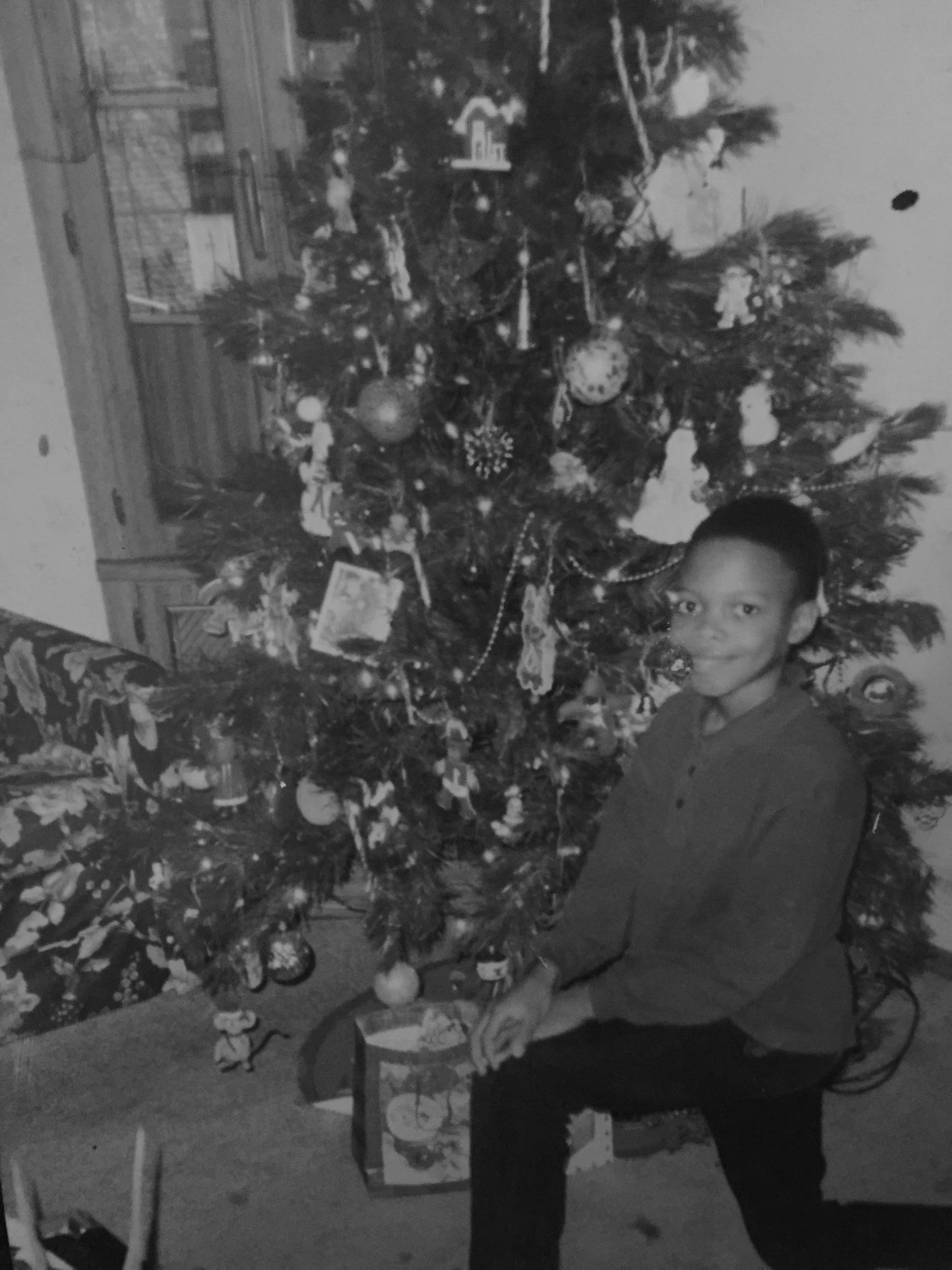
December 1998, Columbus, Ohio — Mom and I just put up the Christmas tree and I stopped to take a holiday pose.
I’ve learned that estrangement doesn’t always come from one big moment. Sometimes it comes from years of misunderstanding. From emotional gaps that were never bridged. From growing into someone your family doesn’t fully recognize, or worse, doesn’t fully accept. And during the holidays, that reality feels sharper. You feel it when you debate whether to reach out. When you wonder if it would be welcomed or if it would reopen wounds you worked hard to close.
There’s a particular kind of sadness that comes with realizing you are no longer close to people who were once central to your life. Not because of anger, but because of evolution. Because life moved forward and took you in different directions. Because survival required boundaries. Because becoming who you needed to be meant stepping away from dynamics that no longer served you, even if they were familiar.
The holidays have a way of forcing reflection. They ask you to look at your life as it is, not as it was supposed to be. They highlight the traditions that faded quietly over time. The phone calls that stopped coming. The gatherings that grew smaller until they stopped happening altogether. And you’re left holding both gratitude and grief at the same time, unsure where one ends and the other begins.
What hurts most, I think, is the expectation. The idea that family should always feel safe. That closeness is automatic. That love means access. But the truth is, sometimes distance is an act of self-preservation. Sometimes the most loving thing you can do for yourself is to accept that certain relationships belong to a past version of your life, not the present one.
There’s also the grief of identity during the holidays. Of realizing you are not who you were when those traditions were first created. You’ve changed. You’ve grown. You’ve survived things that altered your perspective, your needs, your capacity. And yet the holidays often ask you to return to old roles, old expectations, old versions of yourself that no longer fit. That tension can be exhausting. It can make joy feel forced and participation feel performative.
If the holidays hurt this year, you are not broken. You are responding honestly to a season that often ignores emotional complexity. Grief, nostalgia, longing, and gratitude can exist at the same time, even when they contradict each other. There is no right way to move through this season. Sometimes showing up looks like attending gatherings. Sometimes it looks like staying home. Sometimes it looks like creating entirely new traditions that reflect who you are now, not who you used to be.
Maybe this year isn’t about recreating what once was. Maybe it’s about honoring what was without needing to relive it. About making peace with distance, even when it still hurts. About letting yourself feel the loss of family connections without assigning blame or forcing closure where there is none.
The holidays don’t have to be loud to be meaningful. They don’t have to be full to be valid. They can be quiet. Reflective. Personal. They can be a season of tending to yourself, of acknowledging what hurts without rushing to fix it.
You are allowed to miss people who are still alive. You are allowed to grieve relationships that never fully healed. You are allowed to love from a distance. And you are allowed to build a version of the holidays that feels honest, even if it looks different from everyone else’s.
Sometimes, growth means learning how to sit with the empty spaces and trusting that they, too, are part of the story.
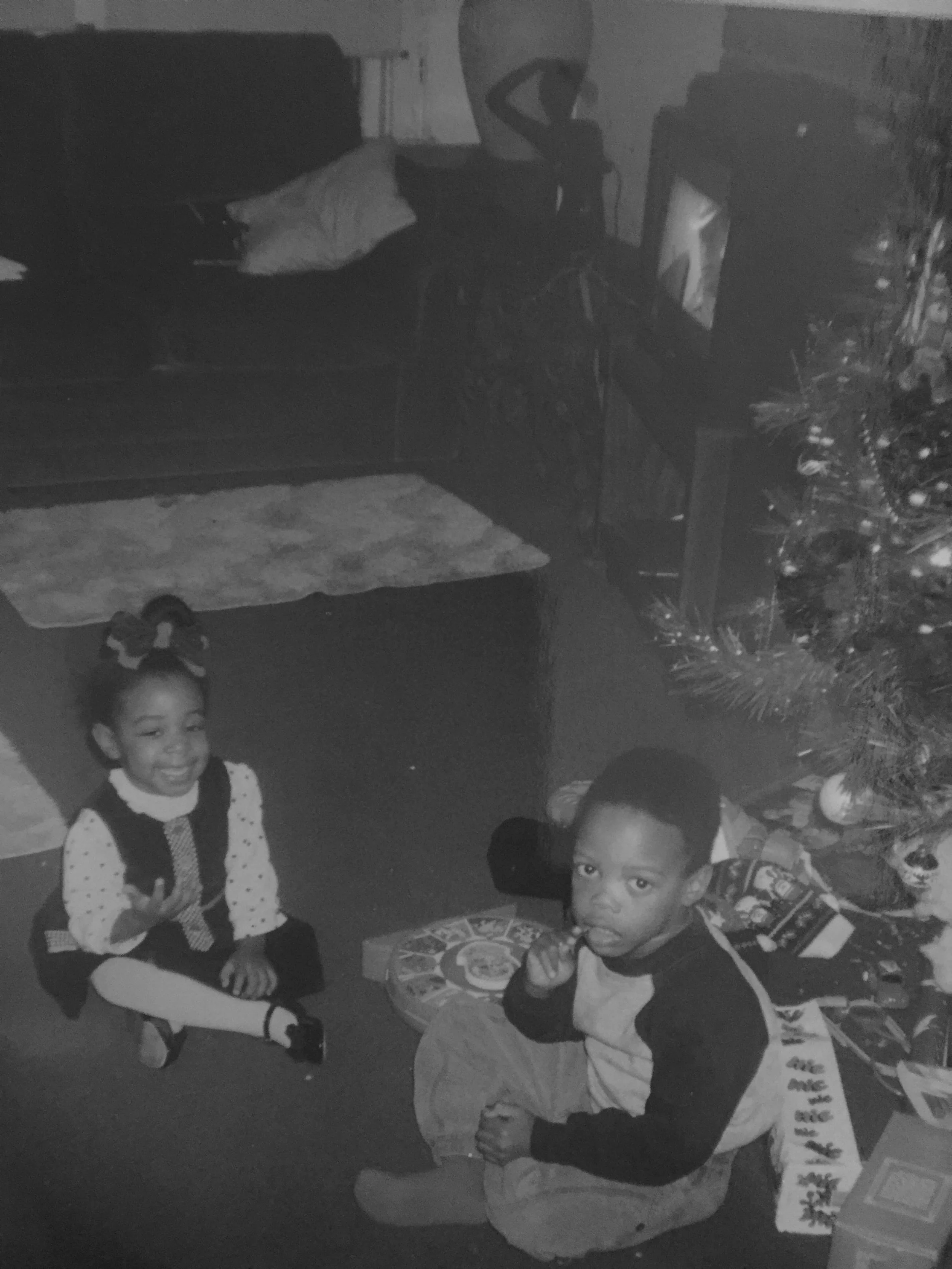
December 1993, Columbus Ohio—Me and my cousin Lauren.